Playing Game Boy and Handheld Consoles on a TV Using the Analogue Pocket Dock and GB Interface
Discover how to play your Game Boy and other handheld consoles on a TV using the Analogue Pocket Dock, MiSTer FPGA, or a GB Interface setup.
The Three Real Options for a Game Boy Handheld Consoles on TV Setup
A Game Boy handheld on a TV has three real paths in 2026, and two of them are FPGA-based. The Analogue Pocket with its Dock, a MiSTer FPGA build on the DE10-Nano board, and the software-based Retro Freak are the current ways to play Game Boy and other handheld consoles on a TV with accurate pixel mapping and minimal lag. The Analogue Pocket Dock sends 1080p over HDMI, but its default scaling is not integer, so pixels are uneven. Enable integer scaling in the menu to fix it. The MiSTer Game Boy core, developed by brNX based on work by FPGAzumSpass, delivers 240p to 1440p via HDMI. The Retro Freak, a 2015 device from Cyber Gadget, maxes at 720p using software emulation. Each path has a specific failure case. The wrong choice adds visible lag or destroys the image.
Analogue Pocket Dock 1080p: The Handheld-First Option
Enable Integer Scaling Immediately
The Analogue Pocket, released in 2021 by Analogue Inc., is an FPGA handheld using an Altera Cyclone V. Its 3.5-inch 1600x1440 LTPS LCD is the best handheld screen for original Game Boy cartridges. The Dock, also from 2021, delivers 480p, 720p, or 1080p over HDMI. The Dock's default scaling is not integer. Pixels are not the same size, creating a slight unevenness in sprite edges. Enable integer scaling in the Pocket's menu to correct this. The Dock's delay is sub-1 frame (under 16.67 ms at 60 Hz).
Cartridge Support And OpenFPGA
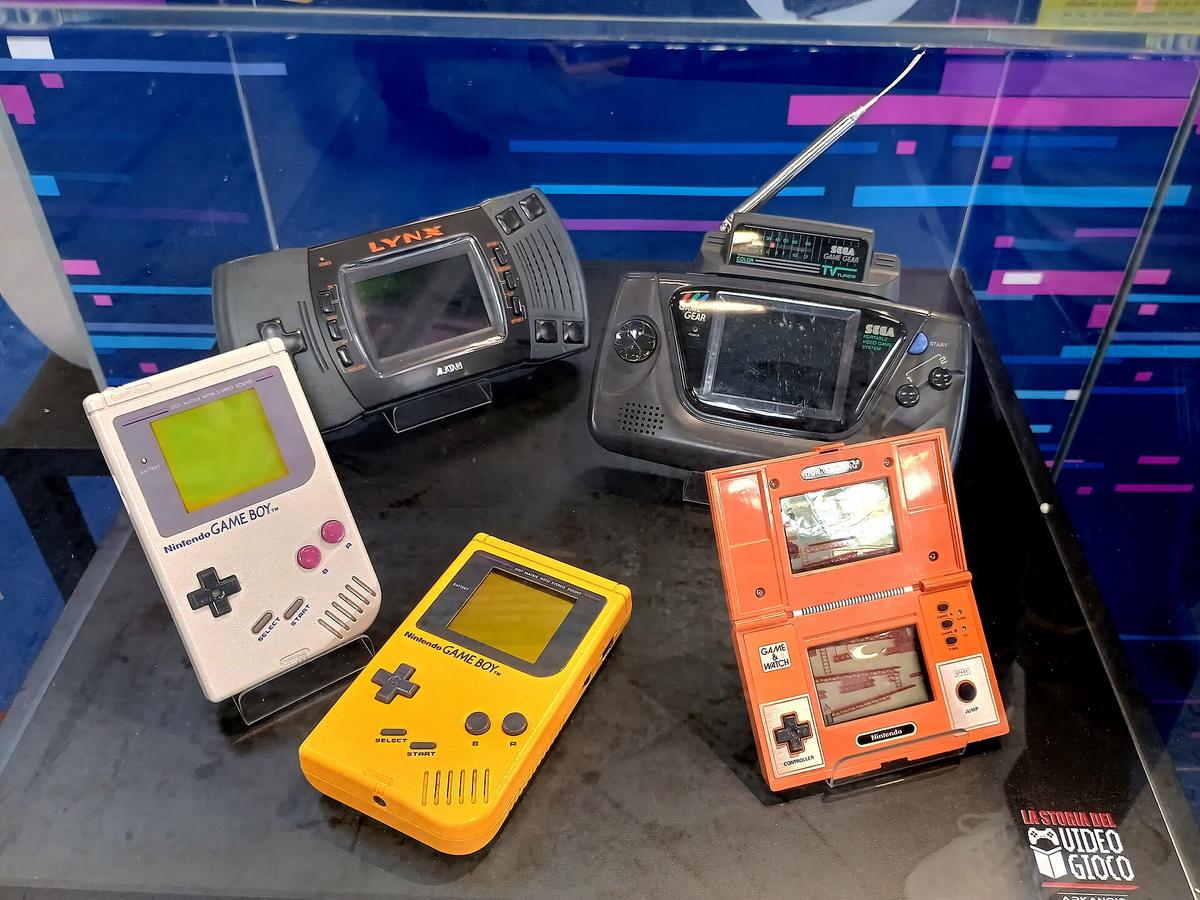
The Pocket accepts Game Boy, Game Boy Color, and Game Boy Advance cartridges directly. With adapters it handles Game Gear, Neo Geo Pocket Color, Atari Lynx, and PC Engine/TurboGrafx-16 HuCards. Its openFPGA platform allows third-party cores.
The failure case: the Dock's 1080p feed, without integer scaling enabled, produces uneven pixel grids. The fix is in the settings menu. A buyer who never opens that menu will see a slightly blurred image. The community documents this correction. For accurate colours, apply a FirebrandX profile, the reference look used across the Analogue Pocket, MiSTer, and RetroTINK platforms.
GB Interface Upscaler: A Dedicated Hardware Path
The GB Interface, developed by InsideGadgets and released in July 2025, is a dedicated hardware upscaler for original Game Boy handhelds. It accepts Game Boy, Game Boy Pocket, and Game Boy Color consoles and delivers 720x480 (480p) over HDMI. Delay is less than 1 ms. Power comes from USB-C at 5 V. Audio is PCM stereo via HDMI. Buy this device if you want to plug your original handheld into a TV without buying a new console or a scaler for the whole setup.
The failure case: the GB Interface delivers only 480p. On a 4K TV, the TV's own scaler handles the 480p-to-4K conversion, and that TV scaler adds 30-40 ms of lag at 4K even with Game Mode on. The GB Interface is a clean path only if you use a display that handles 480p well, or if you feed its signal into a RetroTINK 5X or 4K for final scaling.
| Feature | Analogue Pocket + Dock | MiSTer FPGA | Retro Freak |
|---|---|---|---|
| Hardware type | FPGA (Altera Cyclone V) | FPGA (DE10-Nano) | Software emulation |
| Output resolution | 480p, 720p, 1080p | 240p to 1440p | 720p (1280x720) |
| Latency | Sub-1 frame (~16.67 ms) | ~1 frame (16.67 ms) | Software variable, 2-3 frames |
| Integer scaling | Menu option (corrects default) | Supported, 5x scaling | Not integer, software scaler |
| Cartridge support (native) | GB, GBC, GBA | ROM files (SD card) | GB, GBC, GBA |
| Cartridge support (adapter) | Game Gear, Neo Geo Pocket, Lynx, PC Engine | Dozens of cores (arcade, console, handheld) | Game Gear, PC Engine HuCard |
| Save states | No (native) | Yes (GB core) | Yes |
| FirebrandX profile available | Yes | Yes | No |
| Release year | 2021 | Ongoing (DE10-Nano: 2015) | 2015 |
MiSTer FPGA Handheld Cores: The Open-Source Powerhouse
What The MiSTer Delivers
The MiSTer FPGA project runs on a Terasic DE10-Nano board. It is open-source hardware that replicates consoles at the logic level. For handhelds, the Game Boy core (developed by brNX, based on work by FPGAzumSpass) supports both Game Boy and Game Boy Color modes. The Game Boy Advance core, developed by FPGAzumSpass, is also available. MiSTer delivers 240p to 1440p via HDMI, and the scaling options include integer scaling, 5x scaling, and interpolation filters. Delay via HDMI is approximately one frame (16.67 ms at 60 Hz). Save states are supported on the Game Boy core.
The Assembly Requirement
The failure case: MiSTer is not a plug-and-play device. You must assemble and configure the DE10-Nano board, a USB hub, a RAM module, and an SD card. A pre-built solution costs more. The 220V at 50 Hz mains voltage in Hong Kong is fine for the DE10-Nano's power supply, but imported 100V Japanese consoles used for comparison need a step-down transformer. For accurate colours, the FirebrandX profile is the reference. The 240p test suite ROM is the standard measurement tool for verifying geometry and lag on the MiSTer output.
Retro Freak HDMI Output: The Software Emulation Fallback
The Cyber Gadget Retro Freak Standard Edition, released in 2015, is a software emulation device that accepts original cartridges. It supports Game Boy, Game Boy Color, and Game Boy Advance cartridges natively. With an adapter, it handles Game Gear and PC Engine/TurboGrafx-16 HuCards. Its maximum output resolution is 720p over HDMI. Save states are supported.
The failure case: the Retro Freak uses software emulation, not FPGA simulation. Its timing is approximate, not cycle-accurate. Input lag is 2-3 frames, which is noticeable in rhythm games, shoot-em-ups, and platformers. The 720p output is not integer-scaled from the 160x144 Game Boy resolution, so pixels are uneven. The Retro Freak also treats 240p as a video signal, adding deinterlacing artifacts. A competitive or feel-sensitive player should skip this device entirely. A casual player who wants one box for multiple cartridge types and does not notice a few frames of lag may find it adequate.
The Super Game Boy And Game Boy Player Context
The Super Game Boy, released in 1994 by Nintendo, plays Game Boy cartridges on a Super Famicom or SNES. Its output resolution is 256x224, the SNES native resolution. The Super Game Boy 2, released in 1998, corrected the clock speed to the proper 4.194304 MHz (the original ran at 4.295 MHz) and added a link cable port. The Game Boy Player, released in 2003 by Nintendo for the GameCube, uses original GBA hardware and delivers 480i or 480p (with a component cable on NTSC consoles). Its delay is 1-2 frames. The Game Boy Interface (GBI), developed by Extrems, is a software replacement for the Game Boy Player's disc that delivers 240p, 480i, 480p, 576i, or 576p with sub-1 frame delay in 240p mode. GBI HF (High-Fidelity) is the current version, updated annually. These are older paths that still work, but the Analogue Pocket Dock and MiSTer FPGA offer better image quality and lower delay on a modern TV.
The FirebrandX Profile And Accurate Colours
FirebrandX is the alias of a calibrator who produces the reference CRT and HDR profiles used in the RetroTINK, MiSTer, and Analogue Pocket platforms. These profiles define the target look for accurate emulation. On the Analogue Pocket, applying a FirebrandX profile corrects the colour matrix to match the original Game Boy, Game Boy Color, or Game Boy Advance screen. On MiSTer, the same profile is available. A FirebrandX profile is not available on the Retro Freak, which uses its own software colour palette. If accurate colours matter, use the Analogue Pocket or MiSTer and apply the profile.
What Most Often Goes Wrong
Avoid The Cheap HDMI Converter
The single thing that most often goes wrong is the assumption that any cheap HDMI converter from Sham Shui Po will work. A $50 HKD converter treats a 240p Game Boy signal as 480i video, applies destructive deinterlacing that discards half the vertical resolution, and adds 2-4 frames of lag. The image looks smeared. The input lag makes Super Mario Land feel unplayable.
What To Do Instead
The correct path is integer scaling on an FPGA device like the Analogue Pocket or MiSTer, or a dedicated upscaler like the GB Interface. Buy the Analogue Pocket Dock. Open the settings menu and enable integer scaling immediately. If you build a MiSTer, verify the output with the 240p test suite. If you buy the Retro Freak, accept that you are trading accuracy for convenience. For a single display handling modern and retro consoles in a Hong Kong apartment, buy the Analogue Pocket and Dock, enable integer scaling, apply a FirebrandX profile, and skip every other option.
Common Questions
Does the Analogue Pocket Dock output 1080p at integer scaling by default?
No. The default scaling is not integer, which causes uneven pixel sizes. Enable integer scaling in the Analogue Pocket's settings menu to correct this. The community documents this fix.
What is the latency of the GB Interface upscaler?
The GB Interface, developed by InsideGadgets and released in July 2025, claims less than 1 ms of delay. The real figure should be verified by independent testing; InsideGadgets publishes the specification.
Can the Retro Freak output 1080p?
No. The Retro Freak's maximum output resolution is 720p (1280x720). Its software scaler does not produce integer scaling.
Does the MiSTer FPGA support save states on the Game Boy core?
Yes. The Game Boy core, developed by brNX based on FPGAzumSpass work, supports save states.
What is the Game Boy Interface (GBI) and how does it compare to the Analogue Pocket Dock?
The Game Boy Interface is a software replacement for the Game Boy Player disc, developed by Extrems. It delivers 240p, 480i, 480p, 576i, or 576p with sub-1 frame delay in 240p mode. It requires a GameCube with a Game Boy Player. The Analogue Pocket Dock is a simpler, dedicated path with 1080p output and integer scaling.